Wars would have far-reaching and protracted impacts. The repercussions of World War II are still felt throughout Europe even after more than 75 years have passed. There will also be political, diplomatic, economic, and defense repercussions from the recent Indo-Pak war. Lal Bahadur Shastri died of heart failure during the 1965 war as a result of the perceived setback in the Tashkent Agreement, one of the political repercussions of previous Indo-Pak wars. Due to a disagreement with Pervez Musharraf following the Kargil war, Nawaz Sharif was forced to leave. Since the recent battle, there has been a global perception that Pakistan has won and that Prime Minister Modi has fallen short of his goals.
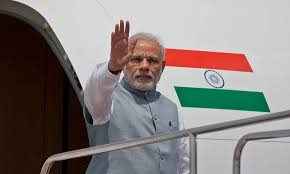
Following this perception, rumors have begun to circulate regarding Prime Minister Modi’s political future—will he stay in office or step down?
Since 2014, Prime Minister Modi has ruled India as though he had been in office for eleven years in a row. There is no pity for Modi in Pakistan’s opposition and government political circles because of his generally antagonistic approach toward Pakistan. Most people believe that Pakistan will benefit more from Modi’s political downfall because, should he be replaced, Rahul Gandhi will pursue a secular India policy rather than Hindutva and Akhand Bharat politics, which are equivalent to breathing Sikhism for India’s Muslims and other minorities.
The best ties between Pakistan and India during the past 50 years were formed under Manmohan Singh and General Pervez Musharraf; aside from these times, there has been some waning. Another, conflicting view is that Pakistan will find it simpler to deal with Modi ji because he is currently weak politically and diplomatically. Diplomatic sources who closely monitor Indian politics claim that Modi ji’s setback is just temporary and that he will soon enter the debate with a more challenging argument. These sources claim that the latest fighting poses no threat to the Modi administration.
According to these diplomatic sources, Modi ji will ultimately be prepared for negotiations and the outcomes of those conversations will be made public under pressure from other countries.
It is crucial to comprehend the Bharatiya Janata Party’s origins and organization in order to comprehend its politics. The Rashtriya Sevak Sangh’s (RSS) political wing is really known as the Bharatiya Janata Party. As if he were the Janata Party’s ideological leader, RSS chief Mohan Bhagwat is the mouthpiece for Hindutva and Akhand Bharat. The other branches of Pakistan’s Islamic extremist groups operate under the central emir, who also serves as their ideological leader.
Modi and Amit Shah are currently in charge of the Indian government. Amit Shah is influenced by Munshi, the leader of India’s freedom, just as Modi has been linked to the RSS since its inception. Gandhi and Munshi disagreed on Hindutva and Akhand Bharat. He rejoined the Nehru administration after having previously split from the Congress. These specifics demonstrate that Modi and Amit Shah’s plan is to establish Akhand Bharat and control the area, which is almost unachievable. For the first time since the recent battle, their aggressive behavior has been severely defeated. Modiji’s assertion that India is a vast nation with unrestricted power has also come under scrutiny.